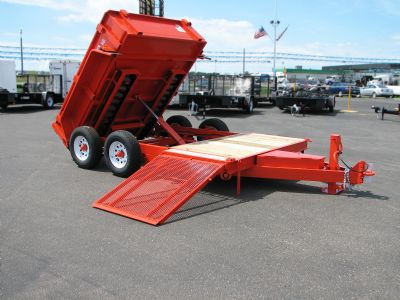
If you are into a sort of business which asks for a lot of dumping work at certain farms, landscapes etc. then its a wise idea to consolidate the traditional dumper with the new age hydraulic dump trailers as their efficiency can prove an asset for any business. With the ever growing scientific and technological advancements, one should look for shifting from the regular trailers to the super efficient and viable hydraulic dump trailers as these work well in the sturdy areas with utmost safety and competency.
The three most important advantages of hydraulic dump trailers are:
-Minimizing physical labor
-Even distribution of sand
-Increased productivity
Check out some of the hydraulic dump trailers here:


Showing posts with label hydraulic equipments. Show all posts
Showing posts with label hydraulic equipments. Show all posts
Hydraulic Dump Trailers: The Utility Machines
Hydraulic Press: Working
Labels:
hydraulic equipments,
hydraulic press,
hydraulics

A hydraulic press can be understood as any machine using hydraulic pressure to compress something. Such presses can range from small hand jacks to large machines used for compressing scrap cars into tiny boxes or sheets. The main principle on which the hydraulic presses or jacks work is basically the Pascal's principle. The equation for which is:
F0/A0=F1/A1
wherein,
F0=Force Applied (to the fluid)
A0= Area (of cylinder)
A1= Area (of the second cylinder)
F1=Resultant Force
As per the given equation, F0 force is applied onto the fluid across an area A0 within a cylinder which is then transferred to another cylinder With area A1. This ultimately results in creating the final force as F1. This is so, as generally, the hydraulic fluid is non-compressible and thus, the pressure in one cylinder is equivalent to the pressure in other cylinder. Most of the hydraulic machines work on the same principle and so does the hydraulic press as well.
Hydraulic Elevators: The Best Deal
Labels:
hydraulic elevators,
hydraulic equipments

Here are few benefits that hydraulic lifts or elevators render and of course the reasons for which people are liking it:
-A complete, fully loaded hydraulic system is available for the users at reasonable prices. Since its a complete elevator package, the user free from the hassles of arranging different parts from different places.
-Installation of hydraulic elevators take relatively lesser time in low rise buildings.
 -The replacement parts for hydraulic elevators are easily available in the market since it is easy to service and the market is free from any kind of monopoly.
-Hydraulic elevators have fewer components than the traditional elevators and hence, there is a lesser need of servicing.
-These have lower risk levels as there is a safe machine room at the basement or at the fir st floor of the elevator.
-Hydraulic Elevators are best suited for high load capacity requirements.
To know more about the working of hydraulic elevators, read here.
Hydraulic Tower Cranes
Tower crane refers to a kind of crane which which is a relatively stationery device with a movable base. Its anatomy is so, that a huge, static tower branches a horizontal beam or jib making an uneven form of alphabetical letter “T”.
Basically, the construction of tower cranes is segregated as per the mechanisms used in its manufacturing. A standard tower crane is actually constructed by assembling smaller supplementary crane while a self erecting  tower crane has a hydraulic base hence it is a branch of hydraulic crane called hydraulic tower crane.
The hydraulic base of the hydraulic tower crane pushes the specific sections of the tower to the desired height, though the jib is attached using a secondary crane prior to starting the hydraulic mechanism.
Hydraulic tower cranes are often used for setting beams and huge building components at construction sites and for loading and unloading at shipping and transportation sites.
Simple Hydraulic Machines
Hydraulic machines are often considered as a highly technical machines and something which can be witnessed only big industries and factories. Though the fact is that one can come across with lots of hydraulic machines in the daily routine life. Be it a construction site or a car, an airplane or an ailing heart, hydraulics is used in almost every industry in the most simplest as well as the most complex ways of all. The car brakes, bulldozers, cranes, valve in heart all work on the principle of hydraulics.
Hence , one can easily spot a hydraulic machinery anywhere and everywhere in the day to day life.
Check out few of the most common hydraulic machinery here:
 Hydraulic Crane
 Hydraulic Car Brakes
 Hydraulic Bulldozer
 Hydraulic Lift Table
Hence , one can easily spot a hydraulic machinery anywhere and everywhere in the day to day life.
Check out few of the most common hydraulic machinery here:
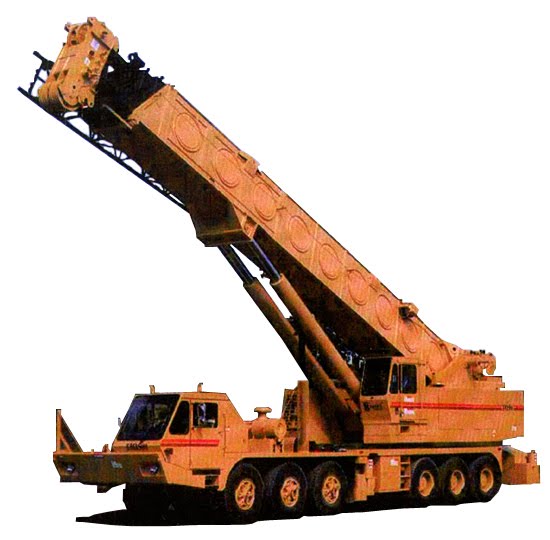 Hydraulic Crane
 Hydraulic Car Brakes
 Hydraulic Bulldozer
 Hydraulic Lift Table
Hydraulic System Life Span: Minimum and Maximum

While working with hydraulic systems, it is important to understand its anatomy in and out. Careless usage of a hydraulic machine can shorten down its potential life drastically.
Reasons for a shorter life span
The most common reason for a hydraulic system's deterioration is hydraulic fluid contamination. Inadequate efforts at removing contaminants from fluid or avoiding the replacement of hydraulic fluid until a severe fluid breakdown occurs, generally reasons the poor performance of system over a period of time.
Most often the contaminants enter the system in form of dust with metal or rubber besides, entrapped water and air too contaminate the fluid. In order to maintain clean and clear hydraulic fluid, it is wise to inspect the fluid samples regularly.
Fluid contamination can also be called “additive deterioration” as additives are the key source which provide the oil with certain specific characteristics. Since these additives are more vulnerable to chemical and physical changes, their deterioration can result into fluid breakdown. Fluid deterioration often occurs due to high temperatures hence, it is advised to keep the fluid operating temperatures well below 60 degree Celsius (140 degree Fahrenheit). Now-a-days most of the hydraulic power units are laced with heat changers, temperature controls and over-temperature.
Solutions to elongate the life span
A hydraulic system's life can be maximized to the fullest by keeping a regular check over the clarity of hydraulic fluid. The two major things which needs to be looked after are fluid contaminants and the chemical composition of fluid.
The best way to inspect fluid is sampling the fluid first and then analyze it. It gives a fair amount of idea as to whether the fluids or filters needs to be replaced or not. Such analysis can also help in determining the exact viscosity of the fluid as well as detecting the contaminants in it like water or other foreign particles. Besides, it can also prove helpful in calculating the chemical composition of the fluid to know whether it can still be used further or not.
A thoughtful evaluation of contaminants and its source within the hydraulic system is extremely important to avoid them in future as well as elongate the working life of a hydraulic system to the utmost.
Controlling Water Hammer in Hydraulics

At times hydraulic machineries pose the problem of high vibration in pumps, lines and tanks. This problem of constant vibration is termed as water hammer. The concept of water hammer is discussed in detail below:
Water Hammer: The Term
As the term itself suggests, water hammer refers to the banging sound of fluid through the pipe which is created due to the pressure wave, a by product of varying fluid velocity, within the pipe. When the banging effect heightens, it almost sounds as if the pipe is being hammered, thus, the term water hammer was coined to refer the problem. The common traits of this problem are high noise levels, broken pipes and vibrations.
Technical Cause of Water Hammering
Technically, when a moving column of hydraulic fluid hits a solid boundary, its velocity drops down to zero and the fluid column looses its strength to absorb the (kinetic) energy affiliated with its motion. Though as the fluid is incompressible, the deformation henceforth is smaller making the fluid accumulate energy like a spring. The level of pressure rise can be calculated as:
Pr = P + u p c
where “P” refers to initial pressure, “u” and “p” refer to initial fluid velocity and density while “c” represents the speed of sound within the fluid.
Solution
Certain damping devices like accumulators can be used to curb down the noise problem. However, as per the above equation, fluid velocity is the only variable which can be manipulated to address the main problem. The lower the fluid column velocity would be, the lower the subsequent pressure rise would be, hence resultantly, lower sound effect.
Hydraulic Laws: The Underestimated Fundamentals

Law 1: Hydraulic pumps are responsible for creating flow and not pressure.
Law 2: The resistance to a running flow creates pressure.
Law 3: Flow decides the actuator speed.
Law 4: Pressure decides the actuator force.
Law 5: Fluid while in pressure takes way of the least resistance.
Law 6: Heat is generated in case the fluid transfers from a high pressure area to a low pressure area (pressure drop) without performing useful work.
The importance of these rules or laws are often underestimated but the fact remains that these are the core fundamentals which form the very platform for the whole hydraulic concept. Hence, it is only essential to recognize the significance of these laws and always bring them in practice.
Repairing a Hydraulic Component

As is the case with every machinery, repairing is done to make a particular faulty part as good as new. With hydraulic machinery too, repairing or reworking is aimed at making the entire machinery work smoothly and in sync with each and every part. Most often, a simple repair of a defective part saves the wrath of changing the entire equipment. Since buying a new hydraulic pump, motor or cylinder would prove a costly deal, repairing them can indeed be a sensible option.
If we go by the absolute calculations then it is quite obvious that the more the cost of new component would be, the more cost effective the repairs would prove. Though the cost of a hydraulic repair involves some crucial factors like:
-Intensity of damage or wear and tear of the component
-Facilities and expertise available to tackle the damage
-The repair techniques used to deal with the wear and tear
Generally the processes used for repairing hydraulic parts are honing, lapping, machining, grinding and hard-chrome plating. A skillful application of such processes can help a great deal in reducing the need of new hydraulic components.
Considering Aftermarket Components
In most cases, the hydraulic repair cost can be curbed even further by the using a non-genuine, aftermarket hydraulic part. These are easily available in market and are generally, manufactured by the niche manufacturers in varied qualities ranging from poor to excellent. Though, these aftermarket components are at times manufactured by the genuine part makers too, hence, one can find a number of non-genuine components to use while repairing a hydraulic equipment.
However, the most important thing to consider while using an aftermarket hydraulic component is the quality of that component. A non-genuine part with a dicey quality can cost a lot more than the actual price while a decent quality component can make you save money on the repair cost and prove an economical choice in long run. An aftermarket part should be used only when you are sure that:
-It is a quality proven component with great performance and service life
-It offers a warranty period
It is wise to buy a aftermarket part only when it carries a known name and the supplier is also ready to back it, otherwise, it is bound to be a risky deal.
Subscribe to:
Posts (Atom)
Subscribe To


 Posts
All Comments
Posts
All Comments